Wednesday, March 6, 2013

Street Art - Public Art


Leona Strassberg Steiner
Semester Project
Street Art-Public Art

My project aims to promote art to people that were never in a museum in their lifetime. Street art is now becoming so mainstream that it is being auctioned off at the most prestigious auction houses in the country. So it seems only logical to bring it into the classroom and to as many people in downtown Jersey City as possible. My after school art program, Alley Arts, has its entrance from the alleyway between Third and Fourth Street. Most of the traffic in the alley is neighbors coming home, drunks looking for a safe place to pee, dog walkers, children playing, and taggers. So why not bring art to everyone?

My plan for this project is twofold, first an empty wall painted white, for taggers, street artists, and students to have a go at making the alleyway a public outside museum, by creating street art or tagging. Giving invited artists and students a theme every couple of months to create wall art in that specified them. The second part of the project is on the adjacent wall I will build a large box, where art will be exhibited. Sometimes art by my students, other time art by artist friends, and hopefully this will become a regular way for artists and students in the area to show work.

The first show will include artists from NJCU as well as Jersey City artists from the neighborhood, of which there are many. The first theme for both walls will be “Summer in the City” after the work is completed there will be a garden party/happening with additional space in my garden for artists to show their work. I hope this will become a regular event that will happen three or four times a year. Knowing how the creative mind of children can explode and morph I would love to also incorporate making art from objects we see on the street as well. Watch out Jersey City! Alley Arts is on the prowl!


Newark Museum


Newark Museum Visit
Leona Strassberg Steiner
Pat Wessel, Tour Guide

The Newark Museum has an especially unique role in Newark city proper, and that is education through the arts and sciences. Because of this role the museum enjoys large classes of school children who come both for the Art Education which has an entire floor just for this purpose, but also an amazing science exhibit which children flock to, both because of the wealth of knowledge that it offers as well as guided tours and workshops that take place in the exhibit itself.  Apart from the large children’s art education component the museum has also incorporated programs for the elder, who can come and have lunch and listen to lectures or enjoy a special tour catered to their needs and interests.

The Newark Museum and her collectors established specific exhibits that catered to the large African American community, with special exhibits from Africa, such as African masks, to honor the community. Contemporary African Art by African American artists is shown in a special wing, with artists from the New Jersey/New York area in particular. The museum also offers a large collection of paintings that coincide with the era of the first house the museum acquired in 1926, along with the art and furniture that was in the house, which still stands in all its grandeur.  Slowly the museum acquired more real estate with the YMCA building turned into the Art Education wing, along with a large sculpture garden.

The many different exhibits that the museum has are carefully planned out to coincide with it’s beautiful architecture, such as traveling shows are hung near the café to draw as many visitors as possible as well as easy access. The Tibetan exhibit is near the patio area where one can stop and gaze up to the sky, before continuing to the Photography wing.

The Newark Museum’s curators each work in their specific areas of expertise. Exhibits are planned years in advance with curators searching for specific works of art to buy or borrow from other museums.  In 1916 the museum started exhibiting contemporary work and just six years ago opened its photography wing for the first time.

Funding for the museum today comes mostly from wealthy donors in the Newark area, though the museum also does enjoy funding for its large Art Education department. The past few years the museum has had to deal with pay cuts and job cuts, as well as the lending collection and mini zoo closing because of the recession, with very little money for building new exhibits.

While walking around the Newark Museum, I especially enjoyed the newer part of the museum where the Tibetan and Contemporary art is located. The natural light coming from above and the spacious hallways that all direct you to the center of the building where the sculpture mobile by Alexander Calder is hung.


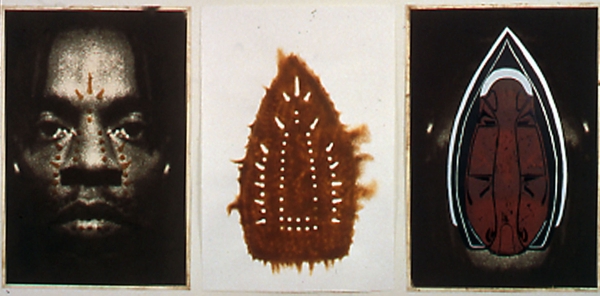
My favorite piece is by Willie Cole, called “Man Spirit Mask”. While looking at the Museum’s collection online I saw that he also has many other pieces that show the iron and the mark it leaves. A way to connect to his people's history of slavery, showing the mark it still leaves on many today.


This piece was acquired by MOMA


MOMA Tour


MOMA Museum Visit
Steven Wheeler, our guide and guru
Leona Strassberg Steiner

Steven took us up to the design and architecture wing of the museum where they were busy hanging a new show. This particular show is of interest since it incorporates video games, some that visitors can play and some for display only. Four art handlers were working on this show, where one aspect of the work was being questioned as to the place that the piece was originally hung. Part of the wing is facing huge windows, which are great for the natural light but not so great for art on the wall, since too much sunlight can damage work, as we saw a small piece was warping apparently from the sun.

Of course the Museum of Modern Art is a huge enterprise with over 800 workers in the building everyday, with security personnel being contracted from the outside. Conservationists fixing art that gets damaged, a scientist, art registrars who are always present when a show is going up or being taken down. The upkeep of such a huge and prestigious building is incredibly expensive with only the rent being paid by what visitors pay to enter. All other expenses are taken care of by donors, private trustees, the board and other committee members.

MOMA has a huge art education department, where young children and adults enjoy classes, lectures, workshops and movies. MOMA is first and foremost an educational entity, striving to bring art and art thinking to its guests. However because of the high entrance fee, not everyone can afford this luxury, and art education can remain elusive to the lower middle class and below.

Steven next took us to a print exhibit by Dieter Roth, called, “Wait, later this will be nothing”, where many different books and editions of prints were chronologically displayed. We enjoyed Roth’s idiosyncrasies with his Literature Sausage, books of all sizes and shapes which were made from many different materials as well as prints made with chocolate and cheese.

MOMA’s mission besides educating its visitors; is also about giving people an experience that they won’t quickly forget. Whether by extremely well known pieces, absurd or odd pieces, or pieces that make you think about yourself or your life experience and what it means. It’s about having a conversation about art with the world, engaging the public to discuss and question the meaning of art and what it means to us.
                      
Tiny Book by Dieter Roth
Literature Sausage by Dieter Roth


Moving picture hung extremely high on the walll

Wolfgang Laib, Hazelnut Pollen


Steven leading us through